 Skip to content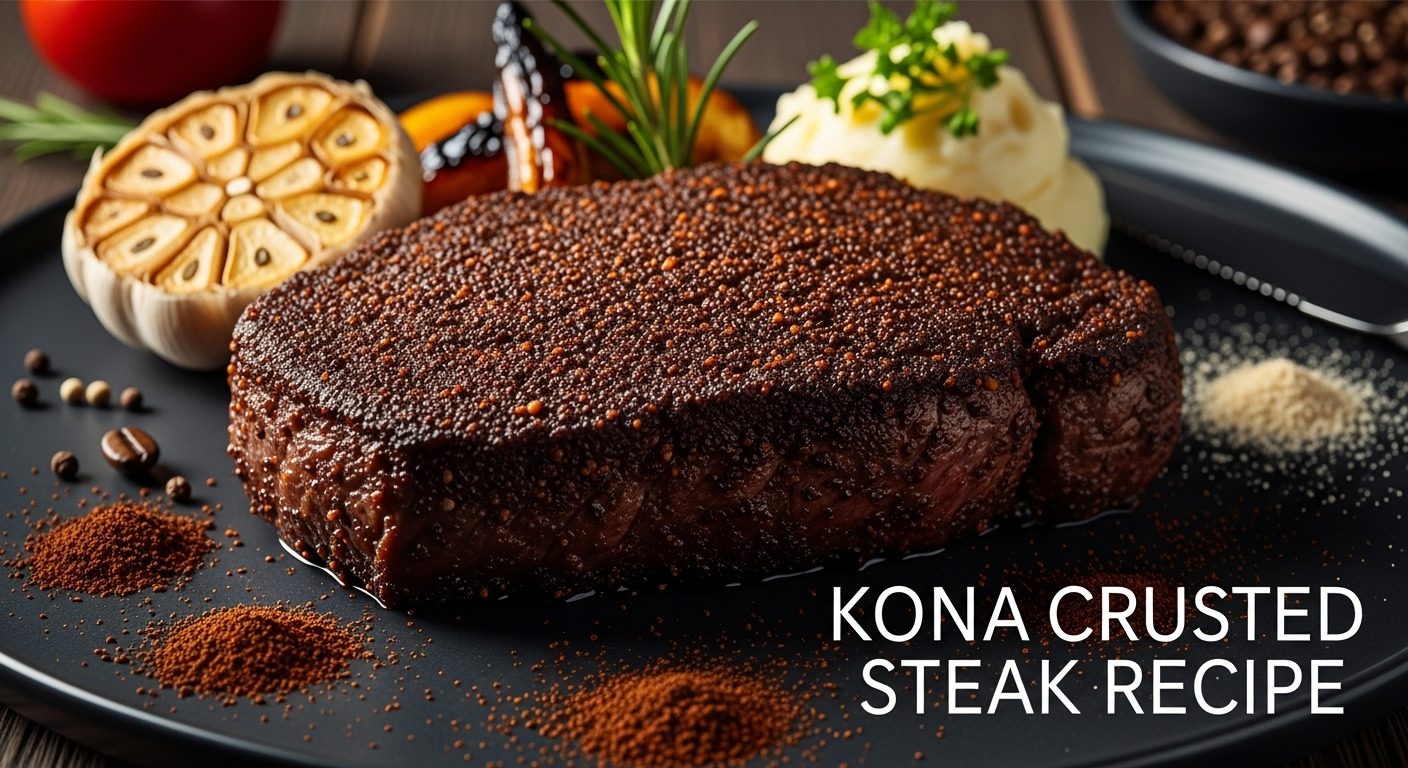
Introduction

What is Kona Crusted? The Ultimate Guide to Flavor, Recipe & Tips
When you have ever looked at a menu at a steakhouse and saw the words Kona crusted, there is a high possibility that you hesitated a moment. Coffee. On steak. Really? I made the same sort of a double-take when I ordered it the first time. And the plate was put in my hands and the smelling came up–black and smoky as hot chocolate, a bit smoky on the edges of it–and encircled the buttery smell of a well-roasted steak. One bite later I was sold. It was not coffee the crust screamed, but said it. The natural juiciness of the beef was framed by the bitter-sweet crackle as the great picture frame frames a painting to give it more sharpness.
In simple terms, then what is Kona crusted? It is a method and a flavor combination, created through the unique nature of Kona coffee, the beans grown on the volcano-slopes of the Big Island of Hawaii, mixed with several pantry spices and a little sweetener. Rubbed on top of steak (or lamb, tuna, even portobello mushrooms) and roasted on high heat, that rub is a burnt, savory shell. Within it, the meat remains soft; it is roasted on the exterior; it is slightly bitter, not overly so, and just sweet enough to keep all in check.
This mantra is the no-frills, E-E-A-T-friendly version that I would have liked to have at my disposal before I had to start making it at home. I will discuss precisely what it means by Kona crusted, the science behind why coffee and beef are such a perfect match, which ingredients to use (and what you can replace in case you cannot find Kona beans) and a step-by-step recipe that I have personally tested many times, as well as the mistakes that I at least made so that you do not have to do the same. I will also mention some tips I learned in the Reddit discussions and Tik Tok chefs (such as freezing the rub five minutes to get it stickier- surprisingly it works), nutrition facts, and side and wine suggestions. You have come to the right place in case you want to know what is Kona crusted and you want to make yourself a home cooked Kona crusted steak that feels like a night out at a restaurant and cost a fortune.
What is Kona Crusted?
At its simplest, Kona crusted is a coffee-rub method that was popularized in the American steakhouses in the twentieth century- most notoriously by Kona-crusted sirloin with caramelized shallot butter at The Capital Grille. The name is an indication of two things; first, that Kona coffee (or a Kona-style, medium-to-dark roast) is ground very fine, the sort of consistency of a spice; second, that it is a balanced rub, neither afraid to be a little sweet. You do bang that rub into the surface of the meat, burn it, to give color, and, when necessary, cook it softly in the oven to the desired temperature. What has come out is a steak that has a assertive, steak-house quality of crust that smells of roasted cacao and hot spice rather than a cup of coffee.
Why Kona? The beans grown in the Kona region of Hawaii are acclaimed as smooth and free of harsh acidity, naturally, and naturally endowed with an opulent flavor, reminiscent of milk chocolate, nuts, and a faint touch of fruit. These characteristics are important when placing coffee under intense heat. Over-bitter or over-acidic espresso powder may turn ashy and black. The sweetness and roundness of Kona makes that edge soft, thus the bitter notes appear to be appealingly toasty and not burned. This is why a spoonfulful of brown sugar tends to go in the mix: it caramelizes soon, coating the grind to the steak and mollify bitterness.
Kona crusting does not apply to beef only. I have applied it to lamb racks (its grassiness is kind of fond of coffee toastiness) and ahi tuna (a quick blast of the flame results in sashimi-rare meat and a coffee-like crust). I have even made portobello thick caps to vegetarian friends; the mushroom umami makes the coffee taste like meat. The fundamental concept, in all situations, is the same: a coffee-intense rub is a rub that is finely ground, thus a tasting and textured surface that happens to differ with a juicy inside. What is Kona crusted according to the outlook of a diner, you may ask? That, too, is an olfactory brittle covering that enhances what is already good about the meat inside.
The Kona Crusted Steak Flavor Profile.
When a Kona crusted steak is put down to the table, you need only close the eyes before you can smell it: roasted coffee with a cocoa-like fullness, a nimbus of garlic and onion, a smattering of smoked paprika on the mixture, were it there. Cut through the crust–there is a shattering brittle crack–and the interior is pink and crimson. The first taste is layered. Coffee is enjoyable bitterness at its polite.<|human|>Coffee is black coffee, which is pleasant bitterness. The brown sugar provides caramelty. Salt roused it all and drew the juices of meat up. Black pepper brightens. When you add a buttery finish such as a caramelized shallot butter (a typical steakhouse trick) you can get those smells pushed even deeper by the fat and the coffee can be further chocolatey.
There is something on the palate that is just as important as taste. A good crust is crisp, compact and evenly browned not a powdery dust that flies away, and a burnt band. It is aimed at Maillard reaction, those rich browning notes which form when proteins and sugars mingle at high temperatures, overlaid with the perfume oils on the coffee. It’s the reason why you are going to hear Kona crust fans refer to it as either mocha-savory or barbecue-next-door-smoke-free. It is no sweeter than a barbecue glaze and so fragrant as to be sickeningly perfumed as plain salt-and-pepper.
What sets it apart with other coffee rubs? Rubs that are heavy on expresso pack like a double shot, with more bitterness. Chili-driven rubs lean spicy. Kona crusted is at its finest contrived, assured, and nearly soft on the tongue. It is the variation between a dark chocolate truffle and the pure 90 percent cacao bar. The first response when friends have it the first time is generally the same, when they are expecting to have coffee they are mostly going to have an extra-beefy steak with an upscale crust on it. Exactly.
Kona Crusted Seasoning Ingredients.
We should be able to know what each ingredient contributes which will help us to dive deeper into the measurements. A Kona crust is essentially a team of ingredients: coffee gives it its aromatic bitterness and deep toastiness, sugar gives it a quick browning and lacquer to make the grains stick to each other, salt gives it its seasoning and attracts a little surface moisture to assist the rub in hydrating and coming together, and the powders of garlic and onion provide the savouriness, and the black pepper provides that aromatic pinch, and the smoked paprika (non-obligatory) gives its warmness and its colour. Others of steakhouse-type blends have snuck in Parmesan grated and mustard powder- both popular tricks. Parmesan is melted and burnt in small savory chips in the crust. Sharp flavors are made by dry mustard without sounding mustardy.
What grind? Think fine sand, not powder. It may clump and scald in case it is too fine (instant espresso). Too rough, and it will not stick on or brown even. I prefer to grind entire beans a couple of times in a spice grinder and then filter away any grains that have the size of a pebble. Roast level matters, too. The best is between medium to medium-dark. Dark roasts would become acrid when subjected to high temperatures. In case you are not able to get 100 per cent Kona in the area where you reside, a Kona blend, or any low-acid Arabica of decent roasting, will suffice.
Lastly, don’t forget the fat. Although this is not one of the ingredients of the dry rub, a neutral high-smoke-point oil (grapeseed, avocado) is used to conduct heat and promote even browning. A butter sauce, such as traditional shallot butter or even a coffee-flavoured brown butter will transform an otherwise memorable Kona crusted steak into an extraordinary one.
Core Ingredients
Kona coffee that is finely ground (2-3 tablespoons per 2 steaks): The anchor. It offers the trademark roasted flavor and refined bitter. I extract fresh just before cooking, the oils are fresher and the kitchen stink proportionally unbelievable. When you making of measure, do not compress it–sift it up like powder.
Brown sugar (1-11/2 tablespoons): This is not a sweet steak one is making. It is there to accelerate the browning process and to make coffee bitter. Demerara or turbinado will also work and provide little crunch. In case you are using darker roast, push sugar up by 1/2 tablespoon.
Kosher salt (1-11/4 teaspoons): Salt seasons over all and draws the tiniest drop of moisture to moisturize the rub. Freshly cracked black pepper (1 teaspoon): Salt seasons throughout, and draws in the smallest amount of moisture to create hydration in the rub. Pepper adds the fresh smell of citrus-pine and warmness.
Garlic (1 teaspoon) powder and onion (1 teaspoon) powder: The secret ingredients of umami. They are absorbed into the crust, and leave a savoury echo which prevents bites being dull.
Smoked paprika (1/2-1 teaspoon, optional): To add color as well as a hint of fire. In case you do not like smoked, use sweet paprika.
Neutral oil to sear: It is not literally in the rub, but it is needed to provide an even spread of heat as well as a uniform crust. I prefer the avocado or grapeseed oil.
Optional Additions
Parmesan cheese, finely grated (1-2 tablespoons): Reminiscent of those served in restaurants, sprinkling of Parmesan cheese melts and browns into the rub, and provides very small savory specks that nearly bring forth the flavors of dry-aged beef. Use good stuff, it will not melt pre-shredded.
Dry mustard (1/2-1 teaspoon): 2 or 3 squeezes would add the liquidity of lemon, but none of that. It is unbelievable that a small amount of mustard powder can be used to make the beef to taste beefier.
Cocoa powder (1/2 teaspoon): Debatable to others, pleasurable to me. It increases the chocolately aspect of the coffee and enhances color. Think mole, not dessert.
Chili elements ( 1/4 -1/2 teaspoon cayenne or chipotle powder): To add light heat. Chipotle is doubling up on smoke; cayenne is clean.
Brown butter powder or mushroom powder (1/4-1/2 teaspoon): Not a classic, but I was able to watch it on TikTok and tried it myself. It gives a savoury touch and softens the edges; this particularly comes in handy when your coffee is more of a sharp outfit.
Pinch of baking soda ( 1/8 teaspoon): A barbecue forum secret: The slightest increase of the surface pH, which gets faster browning. Should be used sparingly; otherwise, it may be soapy.
Ingredient Substitutions
No Kona beans on hand? Don’t bail on the idea. The aim is chocolate-nut low-acid coffee. A fine Columbian, Brazilian, or Guatemalan medium roast will do it perfectly. Easy to use, however, espresso powder can scald; in case that is what you are using, reduce the amount in thirds and add a little more brown sugar to compensate.
Salt: Kosher salt is best in this regard. You can use table salt but cut it by a third, it is more dense.
Sugar: When you are on a low-carb diet, a brown-sugar-like product that uses erythritol/monk fruit mixture should be used. It will not caramelize in the same manner, however, it assists in adhesion and levels bitterness.
Spices: Of the spices, you can find hard to substitute one-to-one, though, a small pinch of MSG ( 1/8 teaspoon) and granulated shallot can replace the umami. Paprika can be varied–sweet when you do not like smoking. To add pepper that does not leave any flakes, a bit of white pepper is sufficient.
Oil: Any neutral oil of high smoke-point is okay. Ghee is also beautiful and has a buttery taste but remember about the solids of milk when it is being seared with a high heat.
How to Prepare Kona Crusted Steak.
Here is the broad view prior to going down to the finer details: pat the steak as dry as possible, rub it heavily with the rub, press to stick it, then set the steak aside as you bring on a pan to blazing hotness. Sear without fussing and creating a rich brown crust, turn once, and in case your steak is more than a thumb thick, complete in the oven. Cut, eat and put a dot of butter or drizzle of pan juices on it. That is the backbone of all my steak of Kona crusted.
Two of the timing notes that had the most significant impact on me: firstly, salting early (within 10-30 minutes of pan hydration) will allow the rub to hydrate a little and thus form a cohesive paste on the surface rather than a dust layer. Second, cook with a thermometer to ensure that it is done. Coffee crusts are meant to be dark; you cannot make judgments of medium-rare depending on color.
And an instance in point: inverse fermentation, (Progress belongs to this) it is a heavy cast-iron skillet that is all your friend. It retains heat, does not allow the temperature to go down when the steak is placed on the metal and develops even browning. Cast iron is more amenable, too, to stainless works.
Step-by-Step Recipe
1) Select the steak: Ribeye, New York strip or filet mignon,11/4-11/2 inches thick. Warm things up to an approximate 30-45 minutes.
2) Rub (two steaks) mixture: 21/2 tbsp finely ground Kona coffee, 11/2 tbsp brown sugar, 11/4 tsp kosher salt, 1 tsp freshly ground black pepper, 1 tsp garlic powder, 1 tsp onion powder, 1/2 tsp smoked paprika. Optional: 1tbsp finely grated Parmesan, 1/2 tsp dry mustard.
3) Dress the steaks with paper towels. Lightly oil the surface. Sprinkle the rub all around (do not leave out the sides) and rub hard so that it sticks to the sides. Place on a rack between 10-15 minutes as the pan is heated.
4) Put a cast-iron skillet over medium-high and heat until it starts smoking. Add 1-2 teaspoons unflavored oil and lay the steaks at once. You must expect a sizzling excitement.
5) Stand and rest 21/2-3 minutes, or until the lower part has a rich brown crust. Turn and roast the second side between 2-3 minutes. Bake the sides as necessary 30-45 seconds.
6) In case the steaks are not heated to your desired temperature, place the pan in a 205degC / 400degF oven. Bake at 50 deg C/122 deg F (rare), 54degC/129 deg F (medium-rare), 57degC/135 deg F (medium).
7) Rest 5-8 minutes on a warm plate. Garnish with 1 spoon caramelized shallot butter or regular butter. Slicing across the grain and now one is ready to serve.
Personal observations: This was tested on a grill side-by-side and in cast iron. I always have a smoother, thinner crust in the skillet with the grill, although I can never be certain. The dissimilarity is heat contact- hard iron smashes air each time.
Essentials of Cooking a Good Crust.
Weigh the coffee as well as possible. A digital scale does not over-pack to cause the crust to be gritty.
Warm a little of the rub in the palm of your hand–to make the sugar loose, and to make it mix–it sounds illogical, but it does make it like a solid seasoning.
Use a splatter screen. High-heat oils of coffee pop like madmen, you will be glad of that later when clean-up of your mess is two minutes rather than ten.
Tik Tok tip that I enjoyed: once coated, freeze the steaks in the freezer during 5 minutes. The rub catches more and does not spill in the pan.
Butter timing: Timing Butter should be added at the end or when not on heat. Butter burns quickly; otherwise it may burn the milk and the coffee will move beyond toasty and become acrid.
Rest on a rack, not a plate. The crust is maintained by the airflow; when it is seated in juices it becomes soft.
Keep a lemon wedge handy. Some drops on your cutting board prior to cutting enrich the whole steak without saying lemon.
Common Mistakes to Avoid
The beans that have been over-roasted: A French roast is lovely in a cup and mean in a pan. Aim at the middle or dark: it has to be medium to medium-dark to ensure the bitterness is chocolatey rather than ashy.
Coarse grind: When the grind can resemble drip-coffe chips, the grind will come off and burn in the pan, resulting in bitter specks.
Excess sugar: There is no more excess sugar. Sugar overload will burn before the meat is cooked. When your kitchen is smelling of burnt caramel retreat.
Pan not hot enough: You will boil rather than scald, and all you end up with is a pale dusty coating which never turns into a crust. Heat until shown by the initial waft of smoke.
Estimating the doneness based on color Kona crusts are deep-colored deliberately. Act with temperature and not eyeballs.
Leaving out the other: Juices, without a rest, will be gushing in, damp and spongy the crust you have so hard built.
Kona Crusted Dishes Variations.
When you punch in the central technique, then the game commences. The Kona crust idea is in a great relationship with most proteins since it offers two things the savory dish desires aromatic bitter taste and brown, roast flavor. Change temperature, time and the amount of rub and you can switch the vibe of a steakhouse to a seafood restaurant or even a vegetarian main without losing the spirit of the dish. Three of my frequent favourite cooks are listed below–all with a new personality, yet the same delicious toasty result.
Kona Crusted Lamb
Lamb loves coffee. The slight bitterness only tapers off the natural sweetness of lamb, and its rural, pastoral nature. With a rack of lamb (approximately 8 ribs), trim the fat cap, and generously apply a less intense form of the steak rub: 2 tablespoons coffee, 1 tablespoon brown sugar, 1 teaspoon kosher salt, 1/2 teaspoon black pepper, 1/2 teaspoon garlic powder, 1/2 teaspoon onion powder, 1/2 teaspoon sweet paprika, and 1 teaspoon minced rosemary rubbed into the rub. Bake the rack fat-side down in a hot pan to simply obtain some color and then roast at 200degC / 400degF to 54-57degC / 130-135degF in the middle. Hang long before slicing into chops.
Tasting notes: rosemary and coffee were created to go together in this case, the pineyness of the herb elevates the roastiness. I usually accompanies it with a fast pan sauce constructed using a splash of red wine, a knob of butter, and a spoon of apricot jam that has been whisked out of the flame. The glaze is fruit-flavored and does not go against the coffee but sings together. Should you feel the desire to add a little more steakhouse theater to it, smear a teaspoon of Dijon over the fat cap after searing, sprinkle it with a thin layer of panko/Parmesan and then place it back in the oven to give it a crunchy top.
Kona Crusted Ahi Tuna
In the case of ahi (yellowfin), speed is the thing to achieve. You desire a coffee rim that is smoky and a ruby rare core. Rinse two 6-8 oz tuna steaks with a lot of dryness. Combine 11/2 tbsp coffee, one tsp of brown sugar, 1/2 tsp of kosher salt, 1/4 tsp black pepper and a pinch of cayenne. Sprinkle on–not much more than beef–and pound. Put a very oily coating of oil in a skillet to boil. Brown each side 30-45 seconds, perhaps 15 seconds on the sides and tug. This is cut across the grain into thick sashimi-like cuts.
Serving suggestions Serve the slices over a warm beluga Lentil salad, sauted carrots and cipollino onions, or make it light as air, with coarse drizzle of orange juice and soy sauce mixed with a dotted portion of honey. The nuttiness of the coffee is combined with the meatiness of the tuna in a steak like manner that is shocking. In case you are sensitive to bitterness with bland fish, dull the rub with a small pinch of powdered sugar or replace brown sugar with maple sugar which spells less harsh.
Vegetarian Options
Kona rub goes down like a delicious steak of cauliflower or portobello. In the case of portobellos, cut inside the gills to dry them, then cut shallow cross-hatch marks on the cap to give something on which the rub can cling. Sprinkle with oil and brush with light layer of rub (1 tbsp coffee 1 tsp brown sugar and the traditional savory suspects), and sear cap-side down until well-browned. Flip, add 1 tablespoon of vegetable stock, cover with 1 minute to soften, and then uncover to dry up the excess moisture. And dessert with lemon-parsley butter.
Cauliflower steaks require a bit of time. Prepare planks of large head, slice 11/2-inch planks, boil 3-4 minutes to soften, dry, and rub and sear. Bake in 205degC / 400degF oven and bake until fork tender. The edges caramelize, and the crust of the coffee has become crispy and you now have what seems to be a surprisingly hearty centerpiece that works well with tahini or chimichurri.
Nutrition & Health Insights
Kona crusting is plastic, as far as nutrition is concerned. The rub itself is low in calories, the rest of the calories are in the steak and the butter used to finish it. A 225 g strip steak is estimated to contain about 600-750 calories per 8 oz with a 45-65g of protein and without any carbohydrates (a few grams of sugar one adds when making the rub). When you are eating low-carb or keto, you can use a brown-sugar-style sweetener in its place or just cut down the amount used to 1 teaspoon and still have a crust that holds together, particularly when you are using a medium-roast coffee.
The normal watch-out with steakhouse recipes is sodium, add salt to the rub to taste, and avoid adding final salt, which is sodium-sensitive. On saturated fat, you should take a leaner part (sirloin) or you may be more aggressive on a ribeye and use olive oil at the end rather than butter. The plate is well balanced by matching it with sides containing fiber (roasted Brussels sprouts, arugula salad and walnuts). And no, you are making coffee, but the amount of caffeine per serving is quite minimal, much of the caffeine remains on the dry grounds and the exposure to heat and the small amount of coffee consumed makes the coffee taste like roasted aromatics more than it tastes like coffee.
Pairs and Service Recommendations.
In the plate Kona crusted steak loves is in stark contrast; creamy, bright, and green. My list of sides was too brief, so I included: garlic smashed potatoes sprinkled with a bit of sour cream to add a tang and blistered green beans sprinkled with lemon zest to add some spice; or an arugula salad tossed and shaved with Parmesan and toasted walnuts. With sauces, a blistering shallot-red wine jus is archetypal, however, the herbaceous stinging of chimichurri is staggering over the roasted crust.
The red and structured pairings in wine are: Cabernet Sauvignon, Syrah/Shiraz or a Tempranillo with a touch of oak. You feel like white, have a fuller-bodied Chardonnay with a light touch of oak or even an orange wine–the tannic bite can take the bitterness of the coffee. The beer lovers will be able to grab a hearty porter or a hoppy IPA; the bitterness of the malt or hops will fit perfectly into the coffee and make the steak seem sweeter in comparison.
FAQs
Kona crusted but not Kona coffee. Yes. A smooth medium roast Arabica. It is low acidity and chocolate-nut flavour.
Will the steak have a coffee flavor?
Not like a sip of espresso. Imagination dark chocolate and roasted nuts–savoury and coffee.
Can I prep the rub ahead?
Absolutely. Combine ajar and keep airtight to a maximum of one month. I store my one in the freezer to retain the oils in coffee.
Should it be chicken or pork good?
Yes, but lighten on the coffee and increase on paprika and brown sugar to more agreeable browning where a chicken has a longer cook time.
Do I need a cast-iron pan?
It is the best, though a heavy stainless skillet will suffice. Preheat more, and do not overcrowd the pan.
I became bitter in my crust–what happened?
It was too hot in the pan, or the sugar was too high or the beans were over-roasted. Turn down the heat but use a medium roast.
Can I grill instead?
Yes. Ingredients Cooking directly over high heat to achieve a crust, then indirectly. Extremely brush the grates and grease them up to prevent adherence of the rub.
Is it caffeinated that you should be scared of?
Negligible. You are putting teaspoons of grounds in it, much of which sticks to the crust and is exposed to a lot of heat; there is not a strong stimulant effect.
Conclusion
It was on a rainy Saturday when the windows were open and my ambition was absurd that I made the first homemade what is Kona crusted steak. The crust was smoking a little too hard, I did flip a hair before time, and I knew more in ten minutes than any article had ever informed me. The following weekend I tried, reduced the sugar, allowed the pan to heat longer and used a less vigorous roast. It was that second steak–mahogany crust and tender center and smells that made my neighbors wonder what I was cooking.
But whatever you steal out of this guide, take it to be this: the process is simple, and the reward in the mouth is unbelievable. The coffee is not there to have dinner turn to breakfast–it is the spice of which you were unaware that your steak required. Begin with the foundation rub, taste, make it your own. And should ye wish to riff, have the lamb, the tuna, or a portobello cap and I wonder how far you can take this notion. Kona crust is not merely a recipe, it is a little tasty attitude adjustment which opens up a new page in your culinary-cookbook..
