 Skip to content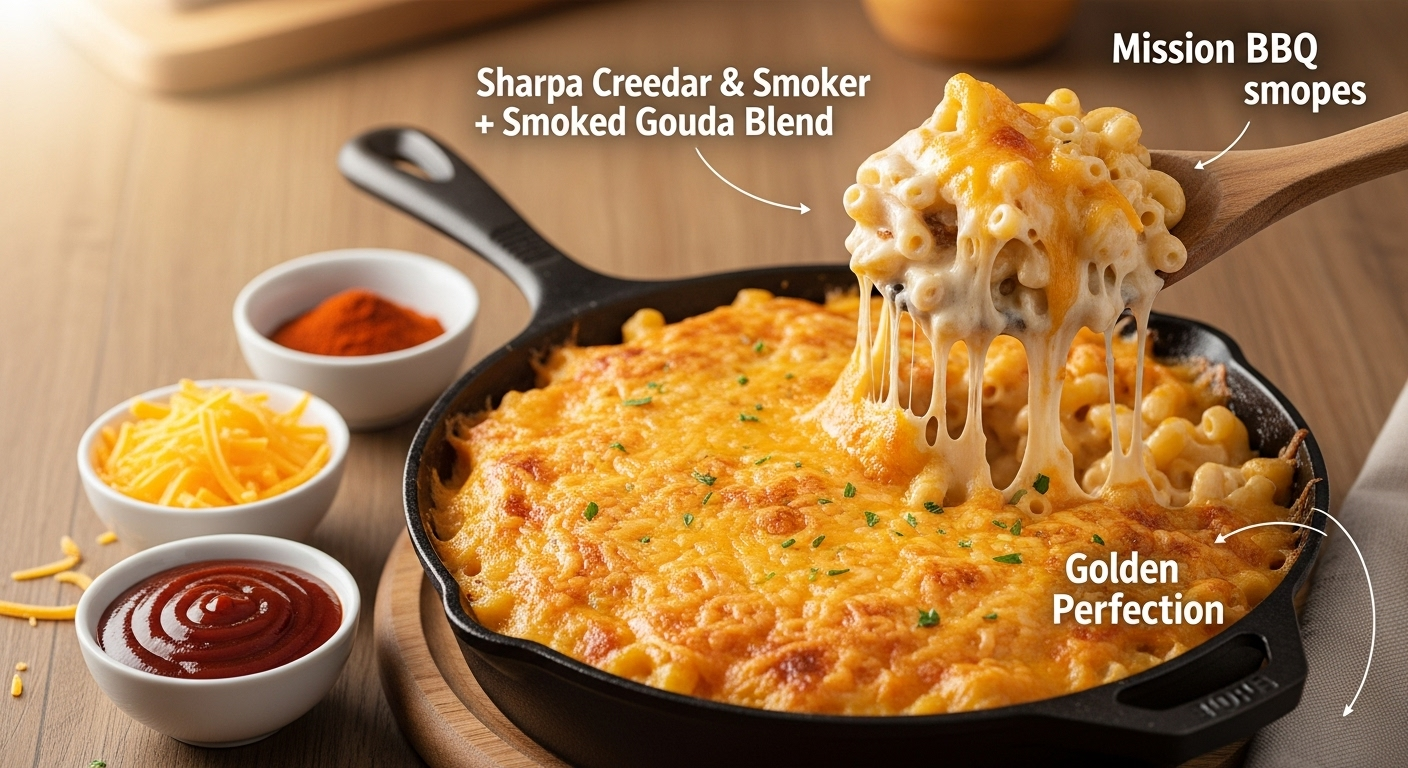
Introduction: Who has a Cult Following: The Mission BBQ Mac and Cheese Recipe.

Mission BBQ Mac and Cheese Recipe
One has mac and cheese and then one has the Mission BBQ mac and cheese one–the one that people discuss at the dinner table long after the dishes are cleaned up. It is that combination of smoke-kiss comfort and silky cheese pull that has been turning this dish into a legend to the side of slow smoked brisket and fall off the bone ribs. And when you were sitting at the table one day and thought, How do they get it so creamy and so bold, you are not off the track at all. This masterclass demonstrates the process of how to recreate those BBQ friendly dishes at home, without a smoker in your kitchen and has a technique that is forgiving enough to cook during a weeknight but refined enough to cook a celebration.
The secret of the Mission BBQ style lies in its core: it is discipline. Perfectly seasoned pasta; a can never-fail roux that smells like something; a layered cheese blend with each cheese having a purpose (sharp cheddar to bite, Monterey Jack to melt, smoked gouda to give a nod to the smoker, but not to pulverize the cheese); and smart seasoning, only as much smoked paprika to give a nod, or mustard to make it glossy or a small drizzle of the barbeque sauce, which will do the nod but not the nod to the cheese. You can put a crunchy top with butter on it and you will have a casserole that is singing with texture and aroma.
The best part? You can spin it your way. Like the additional smokiness but no barbecue sauce? Use smoked paprika and gouda. Feeding kids who hate heat? Omit cayenne and lean towards Colby Jack which is creamy. Cooking for a brisket party? Stuff in pulled pork and be done with it. This guide provides you with the foundation blueprint and numerous avenues that would ensure you seal your target each and every time.
Thinking bonus: Underneath you aren’t just going to get what to do, but why that step is important, so that your mac is not a one-time good, but it is consistently good.
Why Mission BBQ Style Mac and Cheese is appealing to attendants of the BBQ?
Meats used in barbecue are hearty, smoky and savory, thus they need a companion that will not compete with them. The Mission BBQ type of nails hits the nail of the brief in that the nails are constructed to be balanced. Those balances present themselves in 3 places:
1) Flavor architecture. Sharp cheddar provides a tanginess and reality (it cuts the richness of brisket), smoked gouda provides an air of a wood fire which mimics barbecue smoke, and a creamy cheese (Monterey Jack/Colby or even a low-ly presence of Velveeta in some imitations) provides a silky consistency. What has come to light is cheese sauce with dimension not only dairy richness, but ups and downs that are placed side by side with barky ribs and saucy pulled pork without blurring into a mixture of salt.
2) Textural counterpoint. Great BBQ is succulent and soft with crispy ends. One of them, baked Mac, tastes contrasting: a golden and slightly crisp top (butter + breadcrumbs or additional cheese) on soft pasta tubes wrapped in velvet sauce. Each bite becomes not only harder to bite but also more comfortable, that is why visitors cannot stop going back to the pan to have one more spoon.
3) Holding seasoningly with the mind. Most of the recipes of smoky mac are excessive with either liquid smoke or a half cup of barbeque. Mission style Mac maintains its smoker whisper level. The dish leans towards the pit–smoked paprika, smoked gouda or a little twist of BBQ and therefore the cheese is the main attraction. This allows you to mix among sauces (vinegar, mustard, sweet tomato, Alabama white) without any conflicts in tastes.
In summary: Mission BBQ mac will be comfort made to suit the BBQ. It is not one of those sides which passes away, but is a partner–bearing the plate to the cream, and glimpsing a touch of smoke, and sweetly enhancing whatever meat you place beside it.
(Research note: copycat reference book references keep on repetitively stressing smoked gouda and sharp cheddar with roux and a optional use of the BBQ accent instead of an overpowering use of heavy sauce.).
The Difference between this Version and the Mac which is considered regular.
The simplest recipes of the mac and cheese are based on a single cheese, a thin bechamel and the hope that the baking will sort out that the cheese is not that good. Trying to topple that script a la Mission BBQ:
Multi cheese strategy:
Sharp Cheddar = flavor spine.
Smoked Gouda = halo of smoke + Butter Melt.
Monterey Jack/Colby = stretch without the chalk.
(Optional) Pepper Jack = a pathetic spark which does not steal the dishes.
Stacking of seasonings: Beyond a salt and pepper, you’ll be using mustard (dijon or dry) to spice up the cheddar, smoked paprika in lieu of pit perfume, garlic / onion powder to give it some heat and a hint of bbq swirl (not more than 1/4 -1/2 cup in a 9×13) should you desire that sweet taste cameo. The purpose: smoky savory voluptuous, never sweet or dimensions.
Discipline technique: Roux is cooked until it becomes rawness but not too long and causes the cheese profile to fight. Milk + cream are added slowly, to such a degree that a nappe (coat on a spoon) is formed before cheese is added to the pot–this will prevent seized or rough sauces. Cheese is removed off the boil in order to prevent splitting.
Top layer intention: And you are not sprinkling crumbs on the surface only because you want to. You are constructing a thin buttery layer that burns and shields the sauce against drying up. Such is the way to get creamy underneath, golden on the top, every time.
Mission BBQ style mac is comforting but distinctly more considerate- it seems that one has turned the EQ of your favorite song on so that the chorus can pop finally. It is mac and cheese and it is bbq literate and when you taste the two together with smoked meat you will see the hype.
(These elements are repeated by various independent guides – cheese diversity, smoked gouda, discipline of roux, optional BBQ accent.)
Ingredient Blueprint: Slap It together in Layers
There is no such thing as a single ingredient in a team. The following is the roadmap that will always provide that Mission BBQ feel at home:
Pasta: 1 lb (450 g) elbow macaroni traditional; cavatappi and miniature shells are good, too (the sauce fits in them). Bake until firm al dente it becomes soft in the oven.
Fat + Flour (Roux): 6 Tbsp unsalted butter +6 Tbsp all purpose flour. This ratio provides sufficient body in a 9×13 which is not pasty.
Dairy Base:1 cup whole milk +1 cup heavy cream (4 cups total). Whole milk is sufficient, however, the cream increases silkiness and stability.
Cheese Core -(decaying amount-hopefully not longer than 6-7 cups total) freshly shredded:
Cheddar:3 cups (boldness/tang).
Monterey Jack/ Colby Jack: 2 cups (stretch/melt).
Smoked Gouda: 1-11/2 cups (smoke + body buttery).
(Optional) Pepper Jack: no more than 1/2 cup to warm it up.
Seasoning Matrix: 11/2-2 tsp kosher salt (to taste), 3/4- 1 tsp black pepper, 1 tsp smoked paprika, 1 tsp garlic powder, 1/2 tsp onion powder, 1 tsp Dijon mustard (or 1/2 tsp dry mustard).
(Optional) Cayenne 1/8 -1/4 tsp to warm it up.
(Optional) BBQ sauce 1/4-1/2 cup, well balanced, ruffled in at the end.
Topping: 1 cup panko breadcrumbs, which have been tossed in 2 Tbsp melted butter + pinch salt + 1/2 cup grated cheddar (optional). You may take the whole lot of cheese on, in case you do not like crumbs.
Pan: 9×13 inch lightly buttered baking dish.
Why fresh grated? Pre shredded cheese has anti caking starches, which impede melt and dry the flavor. New slicing gets a glossy, sticky, and juicy sauce – the distinction is not minor.
BBQ sauce or no? Imitation leaning copycats divide at this point. You should add it, but lightly, you are only adding dimension, not making it BBQ pasta. A smoky not sweet sauce is most appropriate.
Patterns of ingredients (smoke gouda and cheddar, mixture of milk and cream, optional note of BBQ) are repeated in all available copycat recipes of public origin.
Main Ideas You will need (Deep Rationale)
We will now look at four pillars, and their importance:
1) Pasta shape + salt content: Short and tubular pasta (elbows, cavatappi) gives the pasta surface and inside cavities to hold the sauce. Add salt as the sea- 11/2-2 Tbps kosher salt to 4-5 liters, so pasta is flavored within itself. This will make your end product taste like it is cooked out and not just sauced on the surface.
2) Roux done right Butter + flour: cooked 60-90 seconds beyond foaming. You want aroma change (raw flour – toasty neutral) but none of the browning. Under cooked roux = chalky sauce; over browned = nutty taste that does not get along with smoked gouda. It is this accurate window that provides you with silky body but no noise of flavor.
3) Dairy gradient: It should be mixed with whole milk to maintain a light consistency to be able to flow; it should be mixed with cream to introduce that luxurious touch and keep the mixture smooth. Emulsifying dairy Added cheese then gently steamed (not boiled) to stabilize the emulsification process yielded shiny sauce instead of oily, broken curds.
4) Cheese functions: Imagery cheese is your lead singer, smoked gouda is the sound guitar, Monterey Jack is the rhythm section which gives it a cohesive feeling. Cheddar is only able to become grainy when he becomes hot; Jack makes those sides come out. The forerunner of Gouda even whispers of bbq without having to add liquid smoke (that would make it fake). They are added together to form richness, amalgamate, and identity.
The seasonings as additions, not the stars: Mustard will give cheddar its inherent stinging; smoked paprika will infuse the nose, and not the tongue, with the flavor of roast; the powders of the garlic/onion will give the sauce a savory side, and will make it seem cooked, not dairy. Cayenne should be used to warm not to burn.
(These arguments are consistent with technique oriented copycat and home cook manuals that focus on roux timing, dairy tempering and multi cheese synergy.)
Food Add Ons Including alternative flavor
Feeling like making it more of your crowd? These are the mission-faithful upgrades that have undergone battle tests:
Bacon double smoke: crisp 6-8 rashers, crumble, and half, then fold and roll into the mac before baking; then scatter the rest on it after it bubbles. Bacon gives real smoke + crunch that are in harmony with the campfire sounds of gouda.
Onions, caramelized: Cut 2 onions and cook them low and slow with butter and a pinch of salt until very deep brown (30-35 min). Into the pasta mix the sauce just before it. You will be adding a sweet savory bass bass line which is very good with the BBQ meats.
Jalapeno + corn: To give it a Tex Mex drift, sauté diced jalap and sweet corn in butter and add to the pasta prior to the addition of sauce. You have a warmness and bursts of sweetness without taking the whole flavor.
BBQ swirl finish: Set aside 2-3 Tbsp BBQ sauce; when the mac is in the pan, press a spoon into it dragging it to the top inch. It burns into strips of tang which are detected by the guest in one bite, not in all.
Ritz panko hybrid topper: 1/2 cup panko crackers that have been crumbled + 10 Ritz crackers melted butter + pinch smoked paprika. It is buttery and crunchy, and a bit of smoke.
Brightness: Add herbs Chives/parsley; chop and sprinkle after baking. Green Lift is the taste of rich casseroles.
To add additional goo: Add 4- 6 oz Velveeta into the sauce (use optional). Others who are in the public copy this to get that impossibly slick physique. Keep it low and cheddar and gouda will be on top.
Choose one or two–not all. The signature balance should not be overwhelmed by the upgrade, but enhanced.
Step by Step Approach (Step-by-Step (With a Why It Works at each Step)
Yield: 8-10 servings (9×13 pan)
Oven: 350degF / 175degC (rack centered)
1) Cook pasta until hard but not very soft. 1 lb elbows in good salted water (8-9minutes or 1minute less than package). Why: If no time wasted in the oven, there will be flawless texture.
2) Make the roux. Melt 6 Tbsp butter in Dutch oven on medium heat. Add 6 Tbsp flour and cook until the foam subsides, 60-90 Secs. neutral toasty aroma develops. Why: To determine the viscosity of the sauce and to eliminate the taste of the raw flour.
3) Build the bechamel. Add slowly and fully 3 cups whole milk and whisk. Once it starts getting thick, add 1 cup cream. Gently boil (Small bubbles on sides) but not boil. Why: gradual hydration helps in keeping off lumps; sub boil helps in keeping off splitting.
4) Season the base. Off the heat (or to low) Add 1 tsp Dijon (or 1/2 tsp dry mustard), 1 tsp smoked paprika, 1 tsp garlic powder, 1/2 tsp onion powder, and black pepper, and salt to taste. Why: The dairy seasoning will spread the flavor evenly until the cheese comes.
5) Melt in cheeses. Reduce heat to low. Add dribbles of cheddar, Jack, and smoked gouda and allow to melt after adding. Melt sauce but do not get it hot. Why: Gluten-free; cheese remains shiny and sticky.
6) Optional BBQ nuance. In case of use, add a 1/4-1/2 cup of BBQ sauce (not too sweet). Why: Its addition gives it a whiff of barbecue identity without making the entire pan pasta BBQ.
7) Combine. Drain pasta (do not rinse). To sauce and fold until all tubes have been filled and coated. Why: Starch on pasta assists in the adherence of the sauce.
8) Pan + top. Pour into a buttered 9×13. Combine 1 cup panko, 2 Tbsp melted butter + pinch of salt (extra 1/2 cup grated cheddar may be added) and sprinkle evenly. Why: Plan of action: Custodial savings.
9) Bake. 18-25 minutes in 350degF until sides start to bubble and the top is golden in color. Why: To dry out the casserole, heat sets it and binds the casserole.
10) Rest. 10 minutes before serving. Why: Sauce becomes somewhat cooler and turns into creamy to be scooped.
(This technique is reflective of the group consensus on copycat recipes–roux – slow dairy – off boil cheese – optional BBQ accent – bake to bubbling, not dry up).
How to Make Pasta: Little ingredients, Huge Payoff
Shape choice matters. Elbows, cavatappi and small shells are good due to the fact that they hold cheese sauce. Spaghetti and big shells are to be avoided, they either slide or too much sauce and balance.
Salt like you mean it. With experienced pasta, you are forced to add too much salt to the sauce. One large pot could use 11/2-2 Tbsp kosher salt. Taste the water–it must taste very nice like salty.
Cook shy of done. The pasta must be pulled when it is slightly snappy. It is softened by oven to the ideal tenderness of its fineness. Fully cooked pasta + bake = mush.
Don’t rinse. Washing away of surface starch that aids the adhesion of the sauce occurs. Add rather and fold at once into the sauce.
Butter slick (optional). In case your sauce is not ready when the second batch of pasta is cooked, add pasta and 1-2 tsp butter so it does not stick together but does not cool too much.
Trick in batch timing: It is better to boil water first before you shred cheese. The pasta and the sauce are ready at the same time since by the stage you are ready to shred you have a roaring water and thus, assembly of the pasta and the sauce is fresher and hotter.
Add ins timing: In case you happen to be using bacon, jalapenos, or onions, prepare them in the pasta pot (heat off) right before the addition of the sauce. Once cooked, pasta is held together by folding.
Sanity in quantum: 1lb of pasta will expand to 9×13 full of the just right amount of pasta to sauce ratio. The more the pasta, the more the starved sauce, the less the pasta, the more the soup.
These micro decisions eliminate the two largest fails of home cooking, bland noodles and bad timing which produce clumpy coats rather than a respectful coming together of pasta and cheese.
Science of Cheese sauce: Roux to Silky emulsion
A great cheese sauce is emulation + management. Here’s the science distilled:
Roux role: Fat is first absorbed by the starch granules of flour then the liquid swells the sauce. The addition of the roux cooked but not excessively long preserves thickening strength as well as eliminating rawness. Over browning alters the flavor and makes it somewhat less thickening–good in gravy, not here so good.
Dairy temperature: The addition of milk is to be done gradually, with a whisk to spread out the starch so it swells in its entirety. As soon as you have a simmer of light at the sides, and the sauce on a spoon, you have made a canvas stable.
Cheese time and temperature: Proteins: High temperature breaks them apart and separates the fat, which is low and holds everything in place. And this is the reason why cheese is added at low, by the handful, mixing in between.
Sharpening and emulsifying cheese: Cheddar is sharpened and emulsified by Mustard magic, acidity and aromatics. You will not taste mustard, you will taste more cheddar.
Smoked components: Smoked paprika infuses volatile aromatic components that have a pit smell. It spreads evenly also as it is in powder form and not as blunt as liquid smoke, which is easy to overdo.
Strategic salt: Taste of cheddar and gouda is salty; feel taste after the melting of the cheese. Smashing the ideal salt is simpler to do as compared to modifying a baked casserole afterwards.
Consistency sight view: You desire a loose pre baked sauce; it becomes tight with time in the oven. When your sauce is pudding thick before pasta pour in 2-4 Tbsp warm milk and whisk.
Emergency fixes:
Grainy? Take off the fire, splash of cream, and beat violently.
Too thin? Add a minute or two or whisk an addition of 1 tsp cornstarch into 2 Tbsp cold milk and add in at a bare simmer.
Too salty? Serve with a little balance of unsalted cream and black pepper; do not add sugar.
Get these clues and you will not be a follower of the recipe but will be a driver.
Marrying, Pan, and Bake, Getting the Top and Bottom Right.
Marrying: Add pasta and sauce to each other, when they are hot. Cold pasta repudiation; cold sauce grips upon meeting starch. Fold inwardly with silicone spatula at the bottom and upwards to ensure that all the elbows are filled.
Pan management: Butter your 9×13. Evenly shake mac without pressing into the mold; pockets of micro air ensure that the block does not form. In case you are fond of pockets of goo, dot a few teaspoons of cheese all through the center layer, then smooth the top.
Topping logic:
Panko + butter= crispy lightness that goes brown well.
Ritz + panko= buttered nostalgic crunch.
All cheese top = a brown, bubbly lid that some die hards are fond of (it is richer, though not so crisp).
Bake window: 18-25 minutes at 350degF. You are not boiling the pasta, you are amalgamating and caramelizing. Drawing Keep pulling until you see a lot of vigorous bubbling at the edges and the top is golden. Should become brown too soon, loosely cover with foil during the last 5 minutes.
Rest: 10 minutes minimum. This is the forbearance tax which is rewarded. The soup turns to lush scoopable. Cutting prematurely will give it an appearance of thinness when it is not.
Batch scaling: In the case of two pans, one doubles everything but puts them on different racks and switches them half way. Increase the time by 5-8 minutes when the pans are crowded in the oven.
Waiting service: Wait in 150-160degF in the oven loosely tented not more than 30-40 minutes. In case it becomes tight, pour warm milk and close.
These motions keep your best crackles on and your bottom in custard, just as the Mission disposition we are after.
Pro Tips and errors
Pro Tips
Shred cold cheese. Hot blocks smear and shred unequivocally.
Sauce is best prepared in a large pot, the more surface area the quicker it will cook.
Mustard early, cheese late. Such sequence is to add flavor and safeguard texture.
Taste three times when bechamel is thickened, when cheese is melted and when pasta has been folded.
Reserve a cup of sauce. When the mixture appears tight after folding add the mixture back.
Common Mistakes
Preparation of pasta in the oven. A firm pull in a dente is to be prevented.
Roux too pale or too brown. Too pale- flowery; too brown- contrast of taste. Aim middle.
Boiling after cheese. That’s how you break a sauce. Keep it low.
Drowning in BBQ sauce. Speech, thou hast no need of speech, But of a whisper.
Dependent on pre shredded cheese. Anti caking agents solubilize and suppress taste.
Taste salvage rescue: When you taste it with your first bite and it is sweetness, it was probably covered with sweet BBQ sauce; push it aside with lemon juice (1/2 tsp) or apple cider vinegar and a pinch of salt. In case it is flat add more black pepper and a pinch of smoked paprika.
These pitfalls and fixes are consistent with technique forward copycat recommendations and overall best practices of mac and cheese.
Cheese Selection & Melting.
Sharp cheddar can not be compromised–take 8-12 month cheddar to bite without being brittle. Old fashioned cheddars may become greasy in recipes. Monterey Jack/Colby Jack is a dream to melt and is due to increased moisture and low level of acidity; your texture guarantee. Smoked gouda is buttery smoke and just campfire buy it in its natural state (it is labeled as smoked over beechwood, etc.) instead of any flavored oil.
How to avoid graininess:
Simmer sauce then cheese is added.
Put pieces of cheese in handfuls and allow it to melt in between.
When it contains a high moisture process cheese (such as a small portion of Velveeta), it should be added at the beginning of natural cheeses to stabilize the emulsion.
Regarding salt Cheddar brands are wildly different. It is the reason why you taste when all cheese is in. It is more convenient to slam salt at the bottom than to correct a over salty pan. It is black pepper, which is your friend; it enhances the finish of cheddar.
Adding heat cheeses: Adding pepperjack- keep it 1/2 cup and add at the end so the capsaicin does not get weary when it has to work over summers and become stale.
Budget swaps: But in case the smoked gouda is too expensive or out of stock, replace 50 percent of gouda with plain gouda + 50 percent additional smoked paprika. And you will still have the smoke whisper and no melt lost.
This method honours the mechanics of melting and dynamics of taste resulting in a glittery, stretchy and robustly cheesy sauce, precisely what you desire on top of a crisp surface.
Roads to a Smoky BBQ Note
There are four good roads to smoke, of the mildest to the strongest, which are:
1) Smoked pepper (main street): 1 tsp in the sauce is onion enough to get the aroma, but you can also dust 1/4 tsp over the crumbs before baking a complementary puff. It is the most regular way–the right way.
2) Smoked gouda (structural smoke): It smokes into the body to add an inbuilt campfire flavor, which does not get rough.
3) BBQ sauce micro dose: 1/4-1/2 cup folded on or even 2-3Tbsp flung across the top surface only. Find a sauce that is not overly sweet; find bottles that are labeled with: smoky, Kansas City style (balanced), or Texas style (less sugar).
4) Breadcrumb smoke: Butter and a couple of drops of liquid smoke Toast panko in a skillet, shaking it continuously, and then allow to cool, then as topping. This allows surface smoke instead of the sauce to remain on the surface which has been favorable to certain palates.
What not to do: Use a lot of liquid smoke in the sauce–it has a long-lasting nature and may seem to be chemical. And omit “smoked salt” unless you are sure you have tried it; it will upset the salt balance very fast.
Choose one path; two at most. The most successful ones are smoke conscious, not smoky dominant.
Survey Differences: What’s avarickly yours?
Consider the base recipe to be a platform that is multifunctional. In these three are battle tested spins that do not violate the Mission vibe:
Carolina Kick: To it add 1/2 tsp cayenne, 1/2 tsp dry mustard and end with a tangy vinegar forward BBQ swirl (just 2 Tbsp). Pulled pork–chef’s kiss.
Texas Pit Stop: Add burnt ends of brisket that have been diced small + jalap topper made of panko. Add black pepper forward seasoning (add 1/2 tsp additional), and do not over do paprika.
Comfort Midwest: Omit BBQ sauce, and replace it with caramelized onions and bacon, and place all cheese cap (cheddar/Jack mix) on top. It’s homestyle decadence.
Every direction botches the seasoning and ins additive without losing the creamy center. There is the clue to a house mac that you can have all the year round.
Spicy Kick Version
Heat must be made and not rule. For a balanced spicy mac:
Stir 1/4-1/2 tsp cayenne sauce and 1/2 tsp crushed red pepper panko.
Add 1-2 roasted jalapenos which have had the seeds taken out and chopped in at the combine stage.
In substitution of 1/2 cup of Monterey Jack, use Pepper Jack.
Heat diffusion: The distribution of Capsaicin is superior in fat. That is why the cheese sauce needs the spice to add its warmth that is 3-dimensional rather than aggressive. In case you have mixed audience, maintain the bottom neutral and place pickled jalapenos on the sides; this provides acidity which cuts richness.
Served with: Smoked chicken, hot links or blackened shrimp. The spicy mac is the interchange between hot and smoke to provide the complete plate arc between bold and creaminess.
Meat Lover’s Upgrade
In order to make this into a one pan meal add 11/2-2 cups of one of the following, diced in small sizes:
Brisket that has been smoked (particularly point or burnt ends)
Pulled pork (slightly sprinkled with sauce or dry)
round sausage, crisp or smoked bacon.
Key rules:
The meat must be not dripping but rather dry-ish (sauce dilutes the cheese).
In order to ensure that the meat does not cool the sauce down, warm it bit before folding.
Add add ins to 25% of the total volume or you will overpower the balance of the cheese.
Seasoning modification: Meat contains its salt. Taste; now you may not require any more salt. Everything can be united with black pepper and a small swirl of barbecue (1-2 Tbsp).
Why it works: You recreate the flavor of the BBQ pit in the mac itself and suddenly a side becomes a main and will still be served alongside coleslaw, pickles and cornbread as it was created in a smokehouse.
The Twist on Vegetarian Friendly
To make a healthy veggy edition of the same dish, broccoli florets, sweet corn, and red bell pepper (roasted at 220degC 425degF with olive oil, salt, pepper, and a pinch of smoked paprika), dust them all with smoked paprika. At the combine stage, 2-3 cups are folded into the mac. Optional Adding the smoked provolone (1/2 cup) instead of gouda to get a different shade of smoke.
Umami embellishment: Add 1 tsp white miso to the bechamel in front of cheese to add additional savoriness (miso is an excellent vegetarian replacement of meatiness). Mushroom powder (1/2 tsp) is also a very gentle addition that does not have a mushroom taste.
Chop it and crunch it up: Add panko (1/4 cup) toasted pecans (it should be chopped and toasted) and place it all atop to create a nutty top that goes well with sweet corn and peppers.
Reason why it works: You keep the smoke cream crunch triple being there but with vegetable sweetness and umami in the place of meat.
Serving & Pairing Ideas
Traditional BBQ plate: Two slices of brisket, an overspoonful of mac, dill pickles, coleslaw in vinegar bite and a slice of cornbread. The pickles/slaw level takes the place of the palate and you are able to continue enjoying the richness of both the meat and the mac.
Spread of game day: Mac in a cast iron skillet in the center, and around it, there is a smoked wings, jalapen poppers, and barbecue beans. Mac is dropped in all–deliberately.
Brunch ball Curveball: Warm squares of mac in a skillet until they are crispy around the edges; this is topped with a runny egg and a dribble of hot sauce. Surprising? Yes. Awesome? Also yes.
Sauce diplomacy Mosty3 sauces set (one sweet, one vinegar frontal, one peppery). The mac is neutral ground; guests have the option of making each bite custom.
Garnish intelligently: The chives or parsley sprinkling onto the dish after baking is aesthetically pleasing and pleasing to the palate. A last fresh ground black pepper twist pops cheddar.
Perfect Pairings (BBQ Mains)
Brisket: The spicy bark adores the piquant cheddar kernel. Minimize the quantity of BBQ sauce in the mac and season the brisket the way you want- no conflict.
Ribs (sweet glaze): Complete the route with smoked gouda + paprika in the mac, add no additional BBQ. You already have sweetness on the ribs; should have a balancing not an echoing mac.
Pulled pork: Add notes of mustard and cider vinegar to the mac (a small 1/2 tsp vinegar whisked in the sauce at the end) to serve a Carolina style pork.
Smoked chicken: Get the spicy kick mac; chicken is not so sensitive to the heat and it will be less heavy when the warmth is transferred to the mac.
Sausage links: Go all cheese topper, to add an additional richness and peppery finish to the inside of the sauce (coarse black pepper).
This contrast logic is maintained in this pairing, sweet with less sweet meats, peppery with Macs that are a display of melt and smoke, milder with bolder Macs.
The Creative Ideas of Presentation
Mini cast iron skillets: Single entries cook at a quicker rate, evenly brown, and astonish guests. Perfect when you need to control the portions at the buffets.
Mason jar bakes: Place in a tray layer of the mac with a small swirls and crumbs of Reebok in a wide mouth jar; bake. Picnic what a cute and useful thing to lid.
Two tone top Half panko, half all cheese. It is a casserole shaped tasting board.
Mac “bricks” Chill leftover mac, cut into rectangles, dust in panko, pan fry in butter until crisp on all sides. Eat as a snack in the bar with mustardy snack.
Grazing boards In a board of smoked sausages, pickles, and sharp cheddar cubes (hungry) add warm mac ramekins. Human beings have a tendency to blend and match.
It is not just empty talk but hospitality. A small play will make people recollect your mac as a part of the event.
Storage & Reheating
Cooling: Leave the pan in the room temperature (1 hour) and place a tight cover. Quick chill is used to avoid condensation which may get the top wet.
Fridge: It has a safe period of 3-4 days. Reheat portions as needed.
Freezer: Fill in airtight containers; stamp parchments on the surface in order to eliminate ice crystals. Up to 2 months for best quality.
Reheat (oven, preferred):
Entire pan: Wrap with foil; 300 deg F (150 deg C) 20-30 minutes, drizzling with 2-4 Tbsp milk/ cream on top and then wrapping. Discover top 5 minutes to re crisp.
Slices: Put in little baking-dish, pour over a little milk, cover, 15-18 min., then uncover to crisp.
Reheat (stovetop, where there are scoops): Add a spoon of milk/ cream to a skillet, add mac, cover low, stir occasionally until creamy.
Microwave (quick, yet cautious): 45 second bursts of medium power stirred in one teaspoon of milk then end it with a quick burst of high power to steam. Pour in fresh crumbs and torch/air fry 2 minutes in case you want crunch.
Revival tip Sauce revival Filling the reheated sauce appears to be tight, add a small knob of butter and a splash of hot milk, and whisk it. It re glosses and re emulsifies.
How to preserve food leftovers
Safe temp zone: Store leftovers at a temperature of less than 5o C/41o F in 2 hours. Put in shallow containers in order to cool the center.
Labeling Mark the date; heat the enjoy 4 days. Unless you are a meal prep expert, make sure you freeze up meal portions you will not consume within Day 3.
Reusability: Store toppings in separate containers in case you are wanting them in advance; crumbs should be added just before reheating in order to keep them crunchy.
Lunchbox: Put in a small milk capsule (or small creamer)- shaken into the stuff before reheating in the office to restore silk.
Food safety is important and so is food texture, in two habits you save on quality and health.
Method of Reheating Best without losing the Creaminess
The antagonist of creamy mac is dry heat that is dry. So:
The addition of a little liquid (milk or cream) is always added before reheating.
Close with the first cover to fix the steam, introduce lips.
Moderate temperatures (275-325 deg F) make dairy very happy; high temperatures destroy sauces.
Air fryer (slices): Place in foil with a splash of milk, air fry at 160degC/320degF 10 minutes; open foil and air fry another 2-3 minutes to make it capsulike.
Stovetop steam: To the pan, you add a tablespoon of water, beneath the mac, and the steam loosened the chilled block, and then, towards the end, you add a little cream.
When you are reviving a big party tray, combine it half way on the oven warm up so that it does not get burnt on the edges and cool in the middle.
FAQs
I: I can have this assembled the day before, can I?
A: Yes. Prepare the casserole, refrigerate, and cover. Loosen the top by drizzling it with 2-3 Tbsp milk/cream before baking and allow to reach room temp 20-30 minutes. Cover and bake 10 minutes, then uncover taking about 15-20 minutes to brown. This stops the dryness of the day ahead reading.
Q: Do I need eggs?
Some Southern bakes, take a custardy set made out of beaten eggs. Mission style of leans forward on the sauce; omission of eggs makes it very creamy and simple to reheat.
Q: Best gluten free approach?
A: Gluten free elbows (brown rice/corn mixes are the best holding). In the case of the roux, either 1:1 gluten free flour mix or combine 2 tsp cornstarch and cold milk, and add it to the bechamel at bare simmer. GF panko may be used or all cheese top.
Q: Is it possible to cook in the stovetop only?
A: Yes. You can skip the crumbs and serve in the pot with a little less roux (4 Tbsp butter + 4 Tbsp flour) to ensure that it is spoonable. You will not have the browned top, but it is fast weekday.
Q: Which BBQ sauce brand?
A: Select one that is not dessert sweet. In case your meats are sauced, omit the sauce in the mac and use smoked paprika and gouda in its place.
Legal Stuff/Commentary
Gluten free pasta tips: Cook one minute less than indicated on package- GF shapes mush like they are in leftover heat. Some of the brands are sticky and rinsing can be used to thin the sauce, just rinse and add a little more roux or shred more 1/2 cup Jack to maintain stickiness.
Roux substitutes: Sweet rice flour is a very good GF roux. Or omit flour and instead make the slurry of cornstarch (2 tsp cornstarch + 2 Tbsp cold milk) and stir into hot milk until thickened and then cream is added.
Low lactose: Put in lactose free milk and avoid old cheeses (the old ones are lower in lactose naturally). The sauce is based on technique, rather than lactose.
Vegetarian: All these are meat free by default, but are strict on cheese rennet.
Halal friendly: Use vegetable rennet cheeses, and halal certified add ins, avoid bacon, use turkey bacon or smoked paprika in its place.
Reduce calories alterations: You can use 1 cup cream instead and use 2 Tbsp cream cheese (unbelievably creamy) on top. It is still juicy, and has less calories.
You have to avoid losing the emulsion and balance in seasoning; you have to change this–do it, and the Mission soul will remain in you.
Conclusion: Mission BBQ Mac and Cheese Mindset
Balance + technique: this is the one thing that you should be able to remember. The reason why the recipe of the Mission BBQ mac and cheese is a winner is that it honors the nature of the cheese, smoke and texture differences. As a cook, it is a confidence mix: procedure which you can touch in your fingers: the smell of roux facing the bechamel, the feeling of the spoon slipping through the airless melting shredded cheese turning glossy. On the part of a host, it is a crowd anchor–a side so geared that the rest of your table just does.
Make it once as written. The next time, choose your lane Carolina Kick, Texas Pit Stop or Midwest Comfort and make a home of it. Play with the top. Try jalapenos. Stir in onions. However, do not forget the pillars: solid pasta, creamy sauce, smoky mumble, golden cap. That’s the Mission blueprint.
And you know, when somebody asks you what is your secret, you smile at them and say, well, it is all in the balance.
Recipe Card (copy paste enabled user friendly)
Mission BBQ Mac & Cheese (9×13 Pan)
Pasta: 1lb elbows, boiled to firm al dente.
Roux: 6 Tbsp butter + 6 Tbsp flour
Dairy: 3 cups of whole milk + 1cup cream.
Cheese (fresh shredded): 3 c sharp cheddar, 2 c Monterey Jack /Colby jack, 1-11/2 -c smoked gouda.
Seasonings: 1 tsp Dijon, 1 tsp smoked paprika, 1 tsp of garlic(powder), 1/2 tsp onion powder, 3/4-1 tsp black pepper, salt to taste, pinch cayenne(opt)
BBQ sauce (opt): 1/4-1/2 cup, balanced
Topping: 1 c panko + 2 Tbsp Butter ( + 1/2 c cheddar, optional)
Bake: 350degF for 18-25 min; rest 10 min
Technique (brevity): Roux – lazzarelli – pour milk et creme on nappe – Season – simmer – add cheeses – dessepipero – lasagna – pan & top – bake to the bubble – short-rest.
